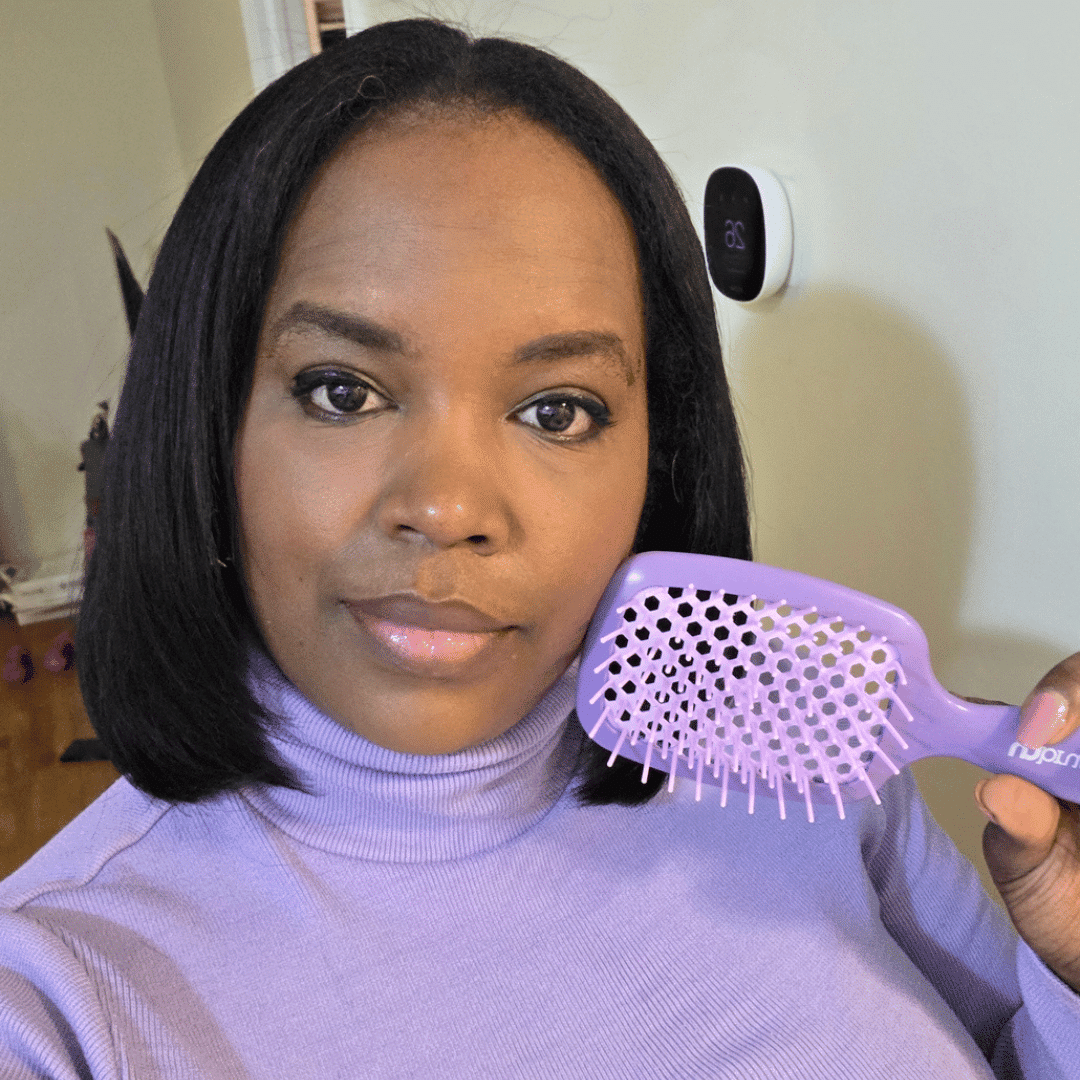
Is the Unbrush Good for Curly Hair? The short answer is yes, but it depends on how you use it.
Coiled and Natural Hair strands can be difficult to manage, especially when it comes to detangling. Snarls, breakage, and painful brushing sessions are common problems, particularly for thicker or kinky textures. That’s why so many people have been talking about this anti-tangle tool lately.
Untangling tools that reduce friction can help minimize mechanical stress, one of the leading causes of grooming-related hair damage. [https://library.scconline.org]
If you’ve ever struggled to find the best brush for detangling type 4 hair, you already know how important the right tool is.
Many people are now searching for the best brush for damaged hair or a gentler option that won’t damage their coils. That’s where this tool comes in.
But does it actually work—or is it just hype?
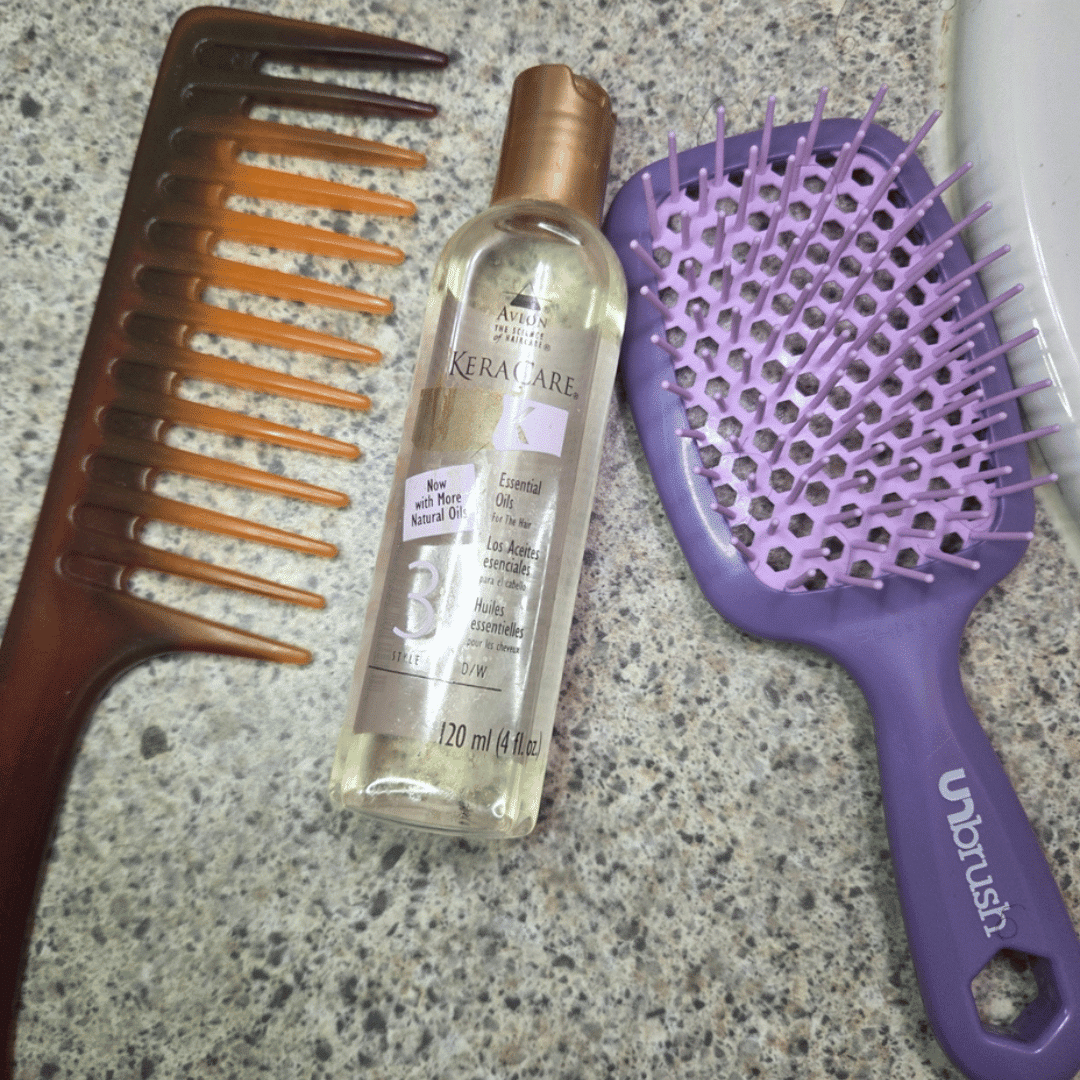
Unlike traditional paddle brushes, this tool uses flexible, dual-length fiber designed to bend around knots rather than force through them.
The vented back allows airflow to move through the hairbrush, making it lighter and easier to maneuver during wash day. There are various colors and patterns of this hairbrush that everyon will love.
The FHI disentangling tool is often considered one of the best detangling brushes for coily hair, especially when used on wet, conditioned hair. It’s designed to glide through snarls with less tension, making it a strong option for anyone looking for the best hairbrush for type 4 hair focused on disentangling hair.
Research published in the Journal of Cosmetic Science found that tangles, knotting, looping of fibers, and friction are major contributors to hair damage during combing and brushing. [https://library.scconline.org]
In my personal experience with untangling my hair, this tool was so good that I didn’t even need conditioner or leave-in for it to work. Does this tool really work? Does the Unbrush actually work? I could never detangle my knotted hair without these products before using this tool. That’s how much I love this hairbrush, and you can believe the hype around it.
However, it’s not designed to style or define coils. If that’s your priority, you’ll need a different tool.
Detangling: Detangling is the process of removing snarls from the hair while minimizing friction, tension, and damage.
If you’re asking what the viral tool is, it’s a flexible anti-tangle hairbrush designed specifically to reduce pulling and damage.
What makes it different from the best hair brushes for type 4 hair is its soft, multi-length bristles that bend instead of forcing through snarls.
The FHI heat hairbrush also has a vented structure that allows airflow to pass through, which can help with faster drying during styling.
This design:
| Hair Type | Performance |
|---|---|
| Straight | Good |
| Wavy (2A-2C) | Very Good |
| Curly (3A-3C) | Excellent |
| Coily (4A-4C) | Excellent |
| Thick Hair | Excellent |
| Fine Hair | Good |
This disentangling hairbrush performs differently depending on your curl pattern, but it generally works across the board. In my experience at the salon, this tool works well on all hair textures. The results will vary.
For looser waves, it may feel like a lighter version of the best brushes for type 4 hair.
For typical kinky hair, it performs very well and strikes a good balance between disentangling hair and maintaining your coil pattern.
On tighter coils, it performs especially well and is considered one of the best disentangling brushes for thick coily hair. The brand also positions the hairbrush and states on its website as suitable for all hair types, including coiled and wavy textures.
This viral detangler works best on wet hair. This is why many people consider it the best wet hairbrush for coiled hair.
Wet, conditioned hair is generally easier to separate strands because increased elasticity reduces resistance during combing. [https://rd.springer.com]
Using the hairbrush this way allows it to glide more smoothly and safely from the scalp.
On dry hair, it can still work, but the results won’t be as gentle. There’s more friction, and the untangling process may feel slightly rougher.
I’m also seeing many people using this device to blow-dry their hair. I would not recommend this process, as the fibers are very flimsy and might melt at too high a heat.
For best results, use it during your wash routine on damp hair, as it is the best hairbrush for curly wet hair.
This tool has several strengths, especially when it comes to disentangling. It is gentle enough to be a hair brush for less damage, lightweight, and easy to use, making it appealing to people who struggle with snarls and tangles. It is Ideal for those looking for the best brush for no breakage.
At the same time, it’s important to understand its limitations. It doesn’t create well-formed curls or style hair, and some people may find it too flexible if they prefer a firmer hairbrush.
Like most tools, it works well when used for its intended purpose—which, in this case, is disentangling.
When comparing the best brushes for type 4 hair, this tool stands out as a untangling-focused tool.
Compared to the Wet Brush, the detangler feels softer and more flexible. It tends to be less aggressive, which can be helpful if you’re trying to avoid damage.
When compared to a Denman hairbrush, the difference is more obvious. The Denman is used for styling and defining curls, while this tool is strictly for disentangling.
Many users combine tools depending on their routine when choosing the best hair brush for curly hair overall.
| Brush | Average Time To Detangle |
|---|---|
| Unbrush | 4 mins |
| Wet Brush | 7 mins |
| Denman | 9 mins |
Here are some main points to take away from this blog post about this untangling hairbrush:
If your main goal is untangling, the disentangling curl hairbrush is one of the best options available today for your hair care regimen.
It won’t define curls or replace styling tools, but it can make wash day easier and faster because it detangles. For people dealing with frequent snarls, it’s a valuable addition to a kinky hair routine.
If disentangling is your biggest struggle, it’s worth trying.
Yes, and that’s when it works best.
Many users report less damage because the bristles are more flexible.
Yes, especially for disentangling dense or coily textures.
No. This tool is for disentangling , while a Denman is for styling.
I would not recommend this brush for drying hair with a blow dryer because the bristles are very soft and it could also melt under high heat.
Hi, I’m Danian, the creator of Natalie Mochin’s Beauty Blog — a space dedicated to real, experience-based hair care tips, healthy hair advice, and hair growth inspiration. As a hairdresser in training, I share practical routines, product recommendations, and lessons from my hands-on salon experience — all fueled by my love for coffee, cats, and dogs.

Hi, I’m Danian, the creator of Natalie Mochins Beauty Blog. As a hairdresser in training, I share practical routines, product recommendations for healthier hair from my hands-on salon experience- All fueled by my love for coffee and mochaccinos.
Let’s be honest, girlfriend. Have you ever washed your hair, blow-dried it, and still felt like it looked a little flat, dull, or breakage? Like
Is the Unbrush Good for Curly Hair? The short answer is yes, but it depends on how you use it. Coiled and Natural Hair strands
Subscribe now to keep reading and get access to the full archive.