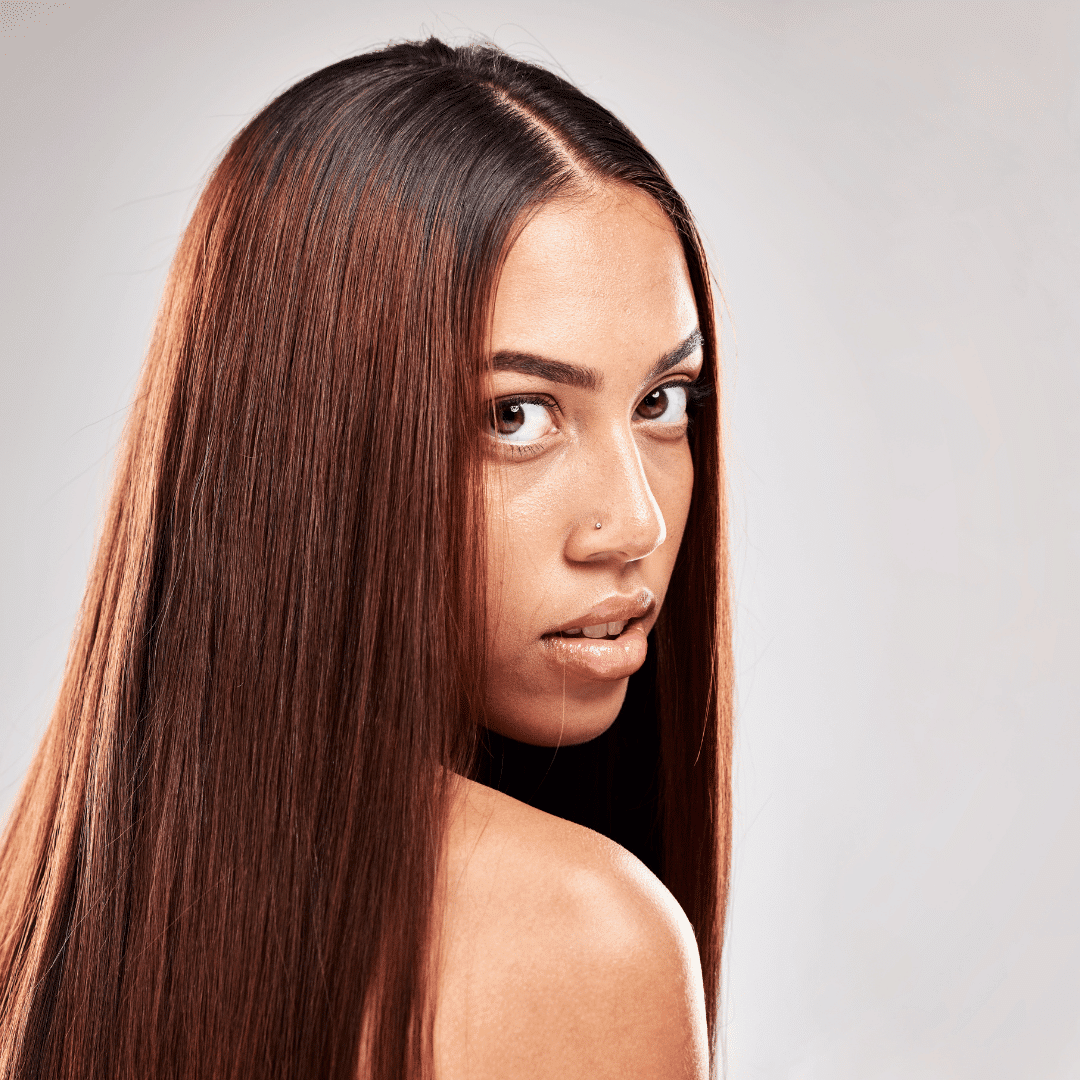
If you have curly hair, you already know the morning struggle – puffiness, shrinkage, humidity, tangles. It’s exactly why keratin treatments have exploded in popularity. They provide shinier, easier-to-manage smooth hair for months. But before you book that appointment, we are going to break down everything you actually need to know about keratin treatments.
Keratin is the structural protein that gives your hair its strength, shape, and elasticity. Over time, heat styling, chemical treatments, and environmental stress break it down — leaving hair drier, frizzier, and harder to manage.
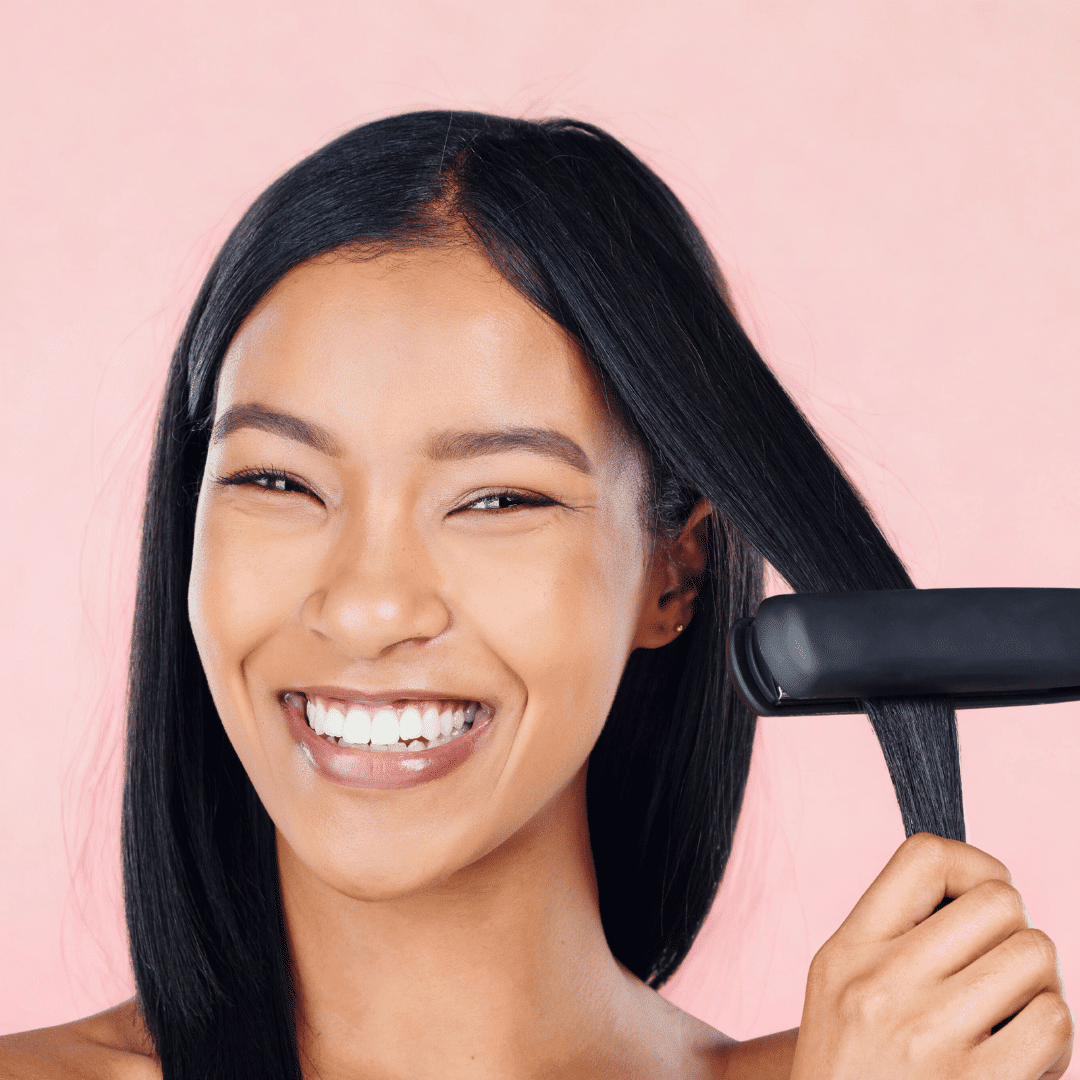
A keratin hair treatment works by infusing a keratin-rich formula into the hair shaft, then sealing it in with a flat iron. This fills gaps in the cuticle, creates a smoother surface, and forms a protective barrier against humidity.
Curly hair has an elliptical shaft and a raised, uneven cuticle — which is why it absorbs humidity so fast and frizzs so easily. Keratin fills those gaps, slows moisture absorption, and makes curls dramatically easier to manage.
Important: A keratin treatment is NOT a relaxer. It coats the hair rather than chemically restructuring it. Your natural curl pattern returns as it grows out.
Keratin can smooth the hair, strengthen it, and reduce frizz in curly hair, but it won’t magically repair damage forever. Understanding what it does (and doesn’t do) can help you decide if a keratin treatment is right for your curls.
What it CAN do:
What it CANNOT do:
Most treatments will loosen your curl pattern at least slightly. The degree depends on your curl type and formula — a 2A wave might barely notice, while a 4C coil using an aggressive formula could experience significant change.
Which Treatment Matches Your Curl Type?
| Curl Type | Best Treatment | Expected Outcome |
| 2A–2C (Wavy) | Brazilian Blowout | Frizz-free waves, pattern preserved |
| 3A–3B (Classic curls) | Brazilian Blowout or Keratin Complex | Smoother curls, less volume |
| 3C (Tight curls) | Keratin Complex | Puffiness reduction, slight loosening |
| 4A–4B (Coily) | Ion Keratin Treatment or MK Professional | Strong frizz control, moderate loosening |
| 4C (Kinky coils) | Ion Keratin Treatment or heat-free options | Best frizz control, texture preserved |
| Color-treated | Ion Keratin Treatment | Nourishing smoothing, minimal stress |
Real Pros:
Real Cons:
Ask your stylist before they start: Which formula? Is it formaldehyde-free? Have you worked with my curl type? Will you do a strand test?
Don’t get a keratin treatment if you have a sensitive hair type or are allergic to formaldehyde. Your hair was recently relaxed within a week, you have severe breakage, or you’re pregnant (consult your doctor first).
Non-negotiables:
Sulfate-free shampoo, always. Sulfates strip keratin fast. Check labels for sodium lauryl sulfate and sodium laureth sulfate.
Sodium chloride-free products. Salt in conditioners and styling products has the same stripping effect.
Wash less frequently. Every wash removes some keratin — extending time between washes extends your results.
Deep condition regularly to repair damaged hair and maintain moisture. Keratin can leave coily hair feeling dry over time; a weekly keratin hair mask can help strengthen hair and prevent brittleness.
With good aftercare, most full treatments last 3–5 months. You’ll start noticing changes around 6–8 weeks.
At-home kits cost $20–$60 but deliver only mild smoothing and carry a higher risk of heat damage and over-processing. For curly hair specifically — which is more porous and more vulnerable to heat — a salon with a curly-hair-experienced stylist is strongly recommended. The judgment calls during the flat iron step alone are worth the price difference.
Will it permanently straighten my curls? No. It fades in 3–5 months and your natural texture returns.
Is it safe for color-treated hair? Yes, if you wait 2 weeks after coloring and choose a gentler formula.
Can I still do wash-and-go styles? Yes — your curl pattern may be slightly looser, but many people find frizzy hair control and definition actually improve.
How soon can I color after? Wait at least 2 weeks.
A keratin treatment can be transformative in your hair care regimen— it all comes down to matching the formula to your curl type, finding a stylist experienced with curly hair, and committing to proper aftercare.
Want to keep your curls and just kill the frizz? Heat-free keratin options and curl-preserving formulas like MK Professional give you protein benefits without sacrificing your texture.
The right treatment, applied by the right hands, means you don’t have to choose between easier hair and your natural curl pattern. You can have both.
Hi, I’m Danian, the creator of Natalie Mochin’s Beauty Blog — a space dedicated to real, experience-based hair care tips, healthy hair advice, and hair growth inspiration. As a hairdresser in training, I share practical routines, product recommendations, and lessons from my hands-on salon experience — all fueled by my love for coffee, cats, and dogs.

Hi, I’m Danian, the creator of Natalie Mochins Beauty Blog. As a hairdresser in training, I share practical routines, product recommendations for healthier hair from my hands-on salon experience- All fueled by my love for coffee and mochaccinos.
Let’s be honest, girlfriend. Have you ever washed your hair, blow-dried it, and still felt like it looked a little flat, dull, or breakage? Like
Is the Unbrush Good for Curly Hair? The short answer is yes, but it depends on how you use it. Coiled and Natural Hair strands
Subscribe now to keep reading and get access to the full archive.