
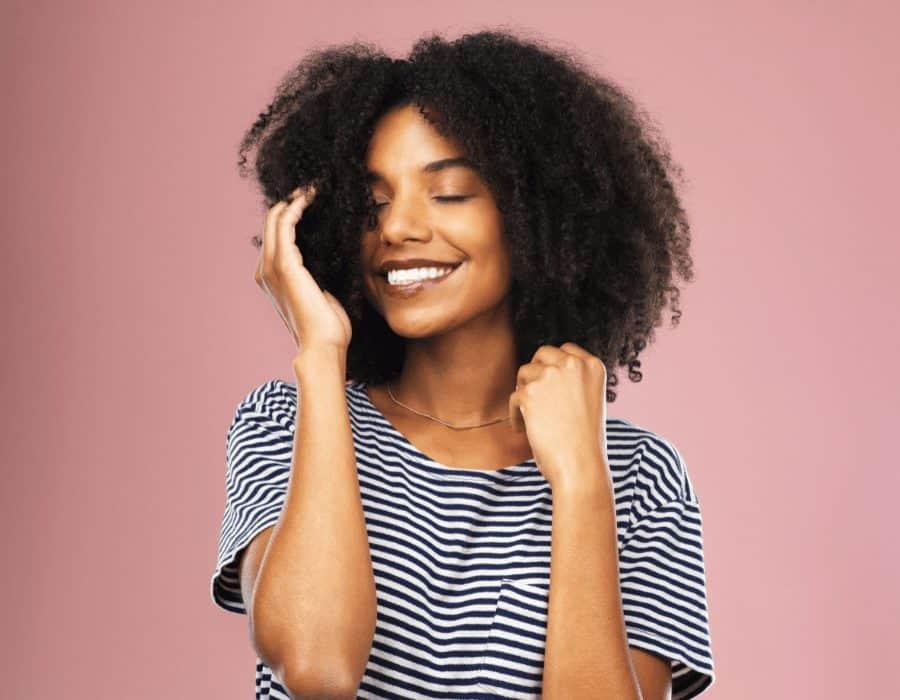
You might be asking: What is a texlaxer? Texlax meaning means to loosen your natural kinky hair coils and natural texture using a mild cream relaxer.
Many women prefer to texturize their hair because of its pros, such as versatility, elasticity, and elongate curl definition. While fully natural, some of it’s cons are coarse, frizzy hair that is thicker and harder to manage than texlaxed hair vs natural hair. For several years, people have called Texlaxer a texturizer.
In this blog post, I will discuss the pros and cons of texturizing natural hair and the best mild relaxer for natural hair. I will help you determine how often to use texturizer for 4c hair. I will also share the best-rated hair relaxers for your texlaxed 4a hair routine. You will get useful tips for texturized 4c natural hair and learn the difference between a texlaxer and a relaxer.
As a hairstylist in training, I want to look at the good and bad sides of texturizing. This will help you understand your choices for caring for textured hair.
One of the most important things to consider when caring for chemically treated curly hair is the timing between retouches. Based on my personal experience, I would recommend getting a retouch only once a year. Why is this? If you retouch too often, you will relax the coils each time and end up with straight hair if you do it too many times. Let your roots grow a good 3 inches, and I promise you will love the results from a yearly touch-up.
You might be wondering what some of the pros and cons of texlaxed hair. From my personal experince, some of the benefits range from manageability to a elongated curl pattern while the downside of texlaxing can include breakage and hair loss. Lets take a deep dive into the pros and cons of texlaxing hair.
👍🏽Looser Curl Pattern
One of the main reasons many people (including myself) choose to chemically process their hair is to achieve a looser version of their natural curl texture rather than completely straight hair.
Why This Happens: Texlaxing works by partially breaking down the internal bonds in the hair using a relaxer, but only to a certain extent.
Unlike traditional relaxing, which aims to fully straighten the hair, texlaxing is done for a shorter period of time or with a milder approach. This means only part of the natural texture is altered, allowing some of the coil pattern to remain while becoming more stretched and elongated.
According to mylivara.com, as a result, the hair transitions from tightly coiled or kinky textures to an elongated curl pattern instead of becoming bone straight hair.
What this means in real life: An elongated curl texture can make a noticeable difference in how your hair behaves day-to-day. You may find that your hair:
– Is easier to detangle compared to tighter coils
– Has reduced shrinkage, making length more visible
– Requires less effort to smooth or style
– Maintains some texture while still being more manageable
👍🏽 Manageability
Believe it or not, one of the benefits of texlaxing or texturizing 4b hair is that it makes hair significantly easier to manage compared to full virgin hair.
Why this happens:Texlaxing partially loosens the natural coil pattern without completely straightening the hair. By doing this, it reduces the tightness of coils and kinks that can naturally interlock and cause tangling
According to ynews.digital, because the hair is less tightly coiled, there is less resistance when combing or styling, making daily handling much easier. In many cases, this reduction in tangling and shrinking is what makes texlaxed hair more manageable overall.
What this means in real life: Improved manageability shows up in your routine almost immediately. You may find that your hair:
– Is easier to detangle, especially on shampoo wash days
– Requires less time to style or maintain
– Is quicker to blow-dry or straighten if needed
– Experiences fewer tangles and knots throughout the week
For many people, this translates into a simpler, faster, and less frustrating hair routine.
👍🏽 Healthy hair
Did you know: one of the key advantages of texlaxing is that it can lead to healthier hair compared to fully relaxed hair.
Why this happens: Relaxers work by breaking down the internal protein bonds of the hair strand to make it straight. The more bonds that are broken, the weaker the hair becomes.
Since texlaxing intentionally under-processes the hair, fewer of these bonds are destroyed. This means the hair retains more of its natural structure and strength.
What this means in real life: Because of this, texlaxed hair often:
– Experiences less breakage than fully relaxed hair
– Maintains more of its natural strength
– Handles styling and manipulation better
You may be wondering: Is a texturizer bad for your hair? Texturizing hair offers benefits, but it also has a downside. With chemically processed hair, you will experience more breakage and hair loss than with entirely natural coils.
You can avoid breakage by taking care of your chemically processed hair. Focus on maintaining it health during your hair care routine. I like to use deep conditioning and hot oil treatments with the best oil for kinky hair.
Texlaxing natural hair can make the strands more fragile. This may hinder growth. Be careful not to apply too much pressure or tension to your coils. This treatment is also permanent, and you may have to big chop or transition if you want to go back to your original texture.
👎🏽Maintenance
When caring for hair that is texturized, you may be wondering how to care for texturized hair. You will find that much more effort goes into maintaining this chemical treatment or texturized 4c natural hair.
This includes regular deep conditioning and trimming the ends to prevent split ends.
Consider how many touch-ups you will perform each year. It is best to perform touch-ups less frequently. This helps avoid overlapping new growth and over-processing your strands. If you want long texlaxed hair, consider how often to process it.
Texturizers and relaxers both alter the texture, but in different ways. A curl hair relaxer helps loosen tight coils or waves. It does this without fully straightening it. This allows for a more natural look while keeping some curl texture.
On the other hand, a relaxer works to fully smoothen your strands, making them sleek and smooth. Texturizers typically use milder chemicals than relaxers, making them less damaging overall. Both options can enhance manageability and style, but it’s important to choose based on your desired look and hair health needs.
Texturizers and texlax are basically the same thing. The only difference is that “texlax” is a more modern term for the process, describing relaxed hair that is underprocessed.
I hope you liked this post about texturizers and how to texturize your hair at home. Texturizing hair can be a good choice if you want more elasticity and coil definition. This works well for 4c tex lax hair when you use the right texturizing hair products. In this post, we discussed what texturizing is.
I believe the benefits of texturizing your strands outweigh the downsides. This is true for texturized hair compared to natural thick hair, as well as texturizer versus relaxer. However, the main drawback of texturized hair is its increased susceptibility to breakage.
When comparing texlaxers and relaxer hair products, I really enjoy the versatility of texlaxed curly hair. Coil defining gel for 4c hair works wonders too.
If you are curious about this chemical treatment, I recommend the Motions relaxer for your texlaxer of choice. It is one of the best texlaxer for 4c hair, especially if you are just starting out. [1](longhaircareforum.com) Some other great relaxers have a Texlax kit that you can try.
If you want to learn how to texlax your hair, check out other YouTube videos. You can also find tips on preparing for the texlaxing method and care for texturized hair.
Hi, I’m Danian, the creator of Natalie Mochin’s Beauty Blog — a space dedicated to real, experience-based hair care tips, healthy hair advice, and hair growth inspiration. As a hairdresser in training, I share practical routines, product recommendations, and lessons from my hands-on salon experience — all fueled by my love for coffee, cats, and dogs.

Hi, I’m Danian, the creator of Natalie Mochins Beauty Blog. As a hairdresser in training, I share practical routines, product recommendations for healthier hair from my hands-on salon experience- All fueled by my love for coffee and mochaccinos.
Let’s be honest, girlfriend. Have you ever washed your hair, blow-dried it, and still felt like it looked a little flat, dull, or breakage? Like
Is the Unbrush Good for Curly Hair? The short answer is yes, but it depends on how you use it. Coiled and Natural Hair strands
Subscribe now to keep reading and get access to the full archive.
One Response